
What Causes Corns on Feet? (Top 5 Causes Explained)
Corns are a common foot ailment that many people experience at some point in their lives.
These small, hardened areas of skin can cause discomfort and irritation, making it important to understand their causes.
In this blog post, we’ll explore the causes of corns, how to identify them, and, importantly, effective ways to prevent them from recurring.
What Is a Corn?
A corn is defined as a small, thickened area of skin with a hardened centre, often referred to as a core. They usually develop on:
The tops of toes
Between toes
The sides of the toes
The ball of the foot
Corns are different from calluses, which are larger and less concentrated.
Understanding the nature of corns is key to preventing them and managing discomfort.
For more information on the differences between corns and calluses, check out the article on Foot Corn Types Explained.

The Main Causes of Corns on Feet
1. Tight or Ill-Fitting Shoes
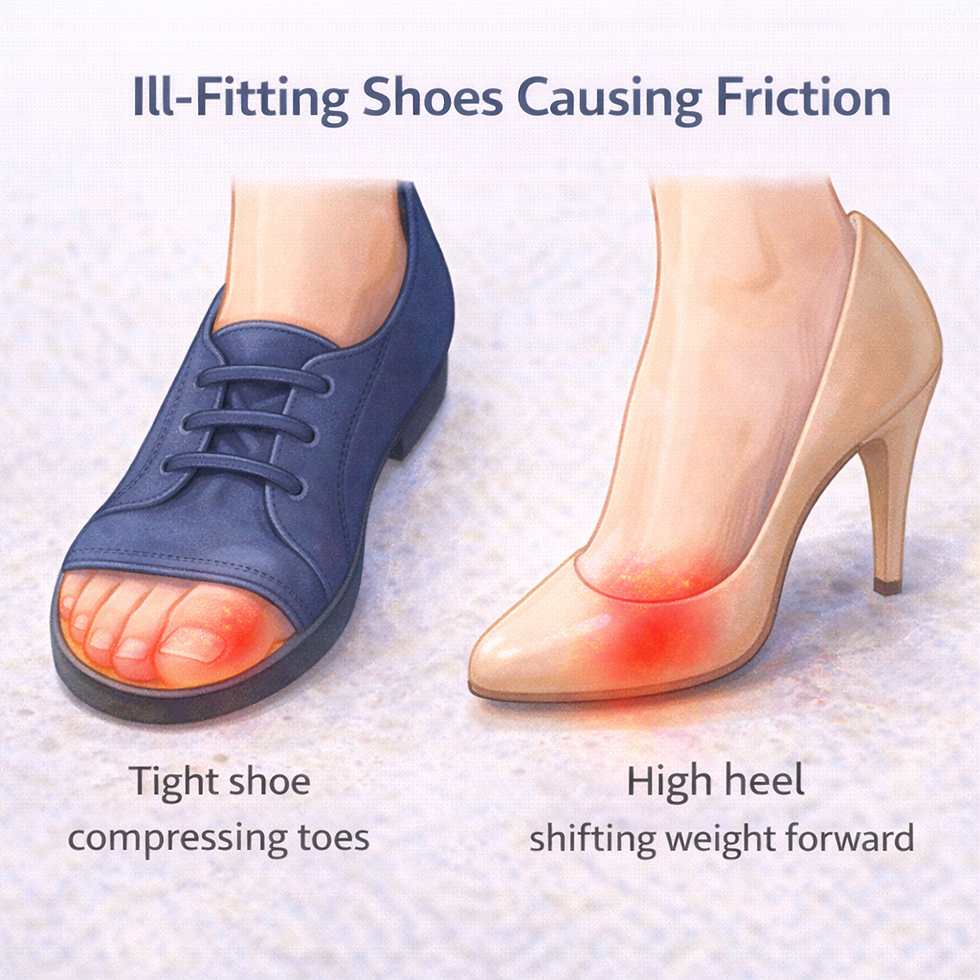
One of the most prevalent causes of corns is wearing shoes that do not fit properly.
Shoes that squeeze the toes create friction, which can lead to the formation of corns.
Common footwear culprits include:
Narrow toe boxes: These shoes push the toes together, increasing friction.
High heels: Elevated shoes can place extra pressure on the balls of the feet.
Stiff materials: Shoes made of unyielding materials can rub against the skin.
Loose shoes: Shoes that do not fit snugly can cause the foot to slide and rub against the material.
When the skin is subjected to repeated friction, it thickens, resulting in a corn.
2. Toe Deformities
Certain structural changes in the toes can create localised pressure points that contribute to the development of corns. Common toe deformities include:
Hammer toes: A condition where the toe bends at the middle joint, causing abnormal pressure.
Claw toes: Characterised by an upward bend in the toe joints, leading to friction against shoes.
Bunions: Bony bumps that form at the big toe joint, often causing the toe to angle towards the others.
Overlapping toes: When one toe rests on top of another, leading to excessive rubbing.
These deformities significantly increase the likelihood of corns forming due to abnormal friction against footwear.

3. Abnormal Walking Pattern
Your walking biomechanics can also influence the formation of corns.
An abnormal gait may place excess weight on specific areas of the foot, creating small pressure points.
Factors contributing to an abnormal walk include:
Flat feet: This can cause uneven weight distribution.
High arches: Create pressure on specific areas of the foot.
Previous injury: Past injuries may alter how you walk.
Poor footwear support: Shoes without proper support can exacerbate these problems.
When certain areas of the foot are subjected to persistent pressure, corns tend to form.
4. Lack of Cushioning or Insoles
Walking or standing on hard surfaces for extended periods can lead to mechanical stress on the feet.
Thin soles and inadequate cushioning can increase discomfort, prompting the skin to thicken in response, forming corns.
Using orthotic or cushioned insoles can help redistribute pressure and reduce friction, significantly improving foot comfort.

5. Untreated Hard Skin
If thickened skin is not managed properly, pressure can build beneath the surface, leading to the formation of corns.
Corns may also develop near areas of scar tissue or altered skin texture.
Regular maintenance of any thickened skin is vital in preventing corns from forming—be sure to consult Callus Over Scar: Why It Happens & How to Fix It Safely for related insights.

Types of Corns
Differentiating between the types of corn can aid in determining the appropriate treatment:
Hard Corns
Most common type
Small, dense centre
Usually found on the tops of toes
Soft Corns
Typically found between the toes
Appear white and rubbery
Caused by moisture and friction
Seed Corns
Tiny and shallow
Often located on the sole
May occur in clusters
For a more in-depth breakdown of corn types, see Foot Corn Types Explained.
When Corns Become a Problem
It is essential to seek assessment for corns in specific situations, especially if they:
Cause persistent pain
Bleed or crack
Show signs of redness or swelling
Recur frequently
Occur in individuals with diabetes
If you notice signs of infection, be sure to read about Infected Foot Callus: Symptoms, Treatment & When to See a Podiatrist. Individuals with diabetes should also stay informed about Diabetic Foot: Warning Signs & Prevention.

How to Prevent Corns on Feet
Preventing corns revolves around reducing friction and pressure on the feet. Here are some key steps to protect your feet:
Choose wide-toe-box shoes: They provide ample space for your toes and reduce friction.
Avoid prolonged high heel use: This minimises pressure on the forefoot.
Use cushioning insoles: These can help absorb shock and reduce friction.
Moisturise regularly: Keeping the skin supple can help prevent hardening.
Gently file thickened skin: Regular maintenance can help; however, avoid cutting it yourself.
For daily maintenance tips, check out Healthy Feet: What Do Healthy Feet Look Like? for guidance.
When to See a Podiatrist
Professional care is strongly recommended in several situations:
If corns are painful
If you experience circulation issues
In cases where corns keep returning
If you are unsure whether it’s a corn or another issue
For further insights, refer to When to See a Podiatrist for Foot Problems for detailed guidance.
Struggling with recurring Corns?
Learn how to properly manage hard skin and prevent buildup in our step-by-step guide.
How to Properly Use Urea Cream for Hard Skin

Further Reading from The Foot Aftercare Institute:
Explore more expert tips and foot care guides to support your skin health recovery.
Understand the pressure and friction patterns that lead to thickened skin buildup.
Learn the different types of corns and how to identify what you're dealing with
Spot early warning signs and know when professional care is needed
Discover how dryness contributes to corns and worsens skin thickening
Not sure if your corn is serious? Here's when to get expert help.
Learn why thickened skin Forms over scars and how it differs from corns
Final Thoughts
Understanding what causes corns on feet and how to manage them is crucial for maintaining foot health.
Implementing preventative measures can significantly reduce your risk of developing corns and enhance your overall foot comfort.
If corns persist or worsen, don’t hesitate to consult a podiatrist for professional advice and treatment options. Your feet deserve to be pain-free and healthy!


Comments