
Why Do Corns Hurt? Causes, Pressure Points & When to Get Help
Corns can look small, but they can cause surprisingly intense pain - especially when walking or wearing shoes.
So why do corns hurt, and what does that pain actually mean?
What Is a Corn?
A corn is a small, thickened area of skin that develops as a response to repeated pressure or friction.
Typically, it contains a hard central core, which distinguishes it from calluses. Corns can form on various parts of the foot, often leading to discomfort during everyday activities.

For more details, check out our article on Foot Corn Types Explained.
Why do corns hurt?
Understanding why corns can be painful helps manage and treat them effectively. Here are several reasons:
Pressure on the Core
Corns develop a hard centre that presses into deeper layers of skin when weight is applied.
This pressure causes the core to push inward, compressing nerve endings in the skin. The result? Increased pain and discomfort.
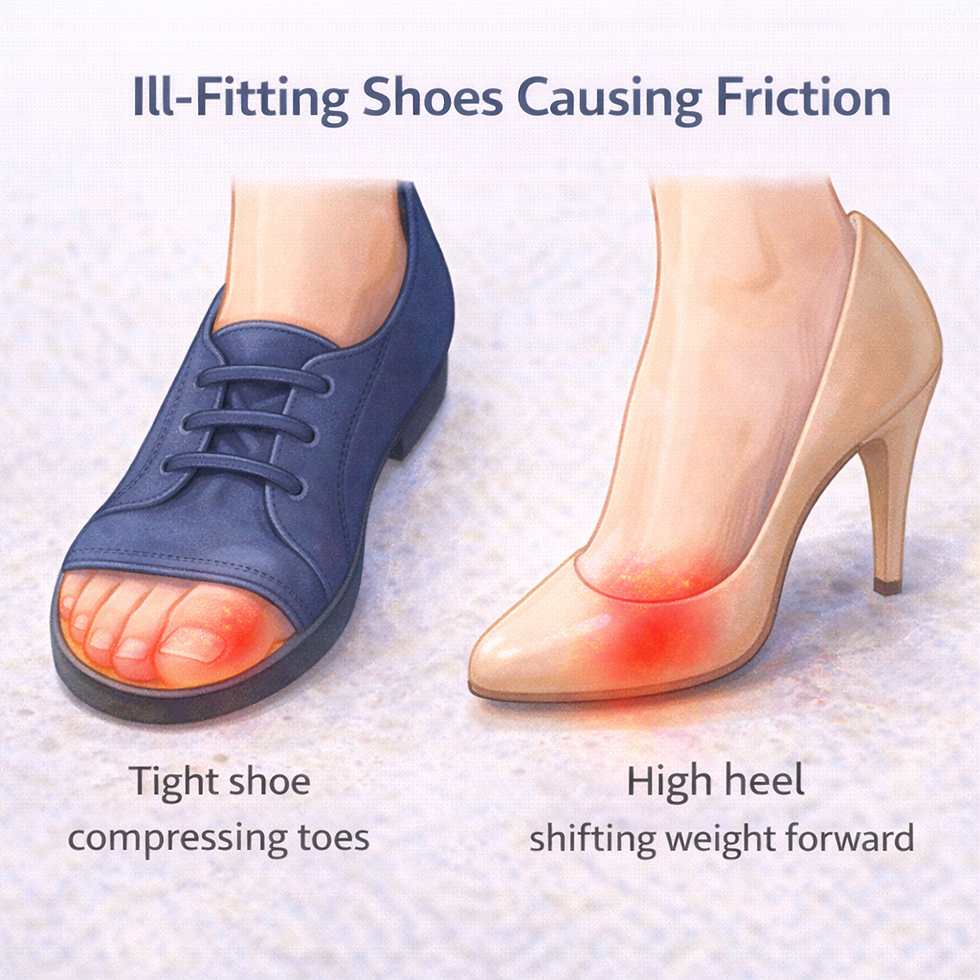
Friction from Footwear
Tight shoes can significantly worsen the pain. When footwear repeatedly rubs against the corn, it exacerbates the condition.
Properly fitting shoes are essential to avoid this situation and minimise the risk of corns developing.
For further information, read about What Causes Corns on Feet?.
Corn Location
Corns can appear on various parts of the foot, but are particularly painful when located on the top of toes, between toes, or on the ball of the foot.
These areas frequently encounter pressure and contact, leading to more pain.
Infection or Inflammation
If your corn exhibits signs of redness, warmth, or fluid buildup, it may indicate an infection or inflammation.
In this case, it’s crucial to seek medical attention.
For insights on treating an infected corn, refer to our article on Infected Foot Callus: Symptoms & Treatment.
Underlying Toe Deformities
Conditions such as hammer toes, claw toes, or overlapping toes can make corns more painful.
These deformities alter how weight is distributed across the foot, intensifying pressure on certain areas and leading to the development of corns.
Learn more about these issues in our article on Foot Types and Toe Shapes Explained.

Corn Pain vs Callus Pain
Understanding the difference between corn pain and callus pain can help in identifying issues accurately:
Corns: Small, localised, and can cause sharp pain when pressure is applied.
Calluses: Broader in area and usually painless. They may create pressure-related discomfort, but don't typically evoke the sharp stabbing sensation of a corn.
Discover more in our guide on Callus vs Corn: What’s the Difference?.
When Corn Causing Pain Is a Red Flag
It is essential to recognise when corn pain signals a more significant issue. Here are key situations where you should seek professional advice:
If you have diabetes, foot conditions can lead to severe complications.
If the pain becomes severe and unmanageable.
If the corn begins to bleed or cracks deeply, indicating possible infection.
For further guidance, see our articles on Diabetic Foot: Warning Signs and When to See a Podiatrist for Foot Problems.

How to Relieve Corn Pain Safely
Finding relief from corn pain is possible with a few adjustments:
Wear Wider Shoes: This reduces pressure on the affected area and allows for comfort while walking.
Use Protective Padding: Cushioning the corn can alleviate pain throughout the day.
Reduce Pressure: Apply less weight to the affected area when possible.
Avoid Cutting Deeply: While it can be tempting to remove the corn yourself, it's essential to avoid deep cuts.
Keep Surrounding Skin Moisturised: Hydration helps maintain skin elasticity and prevents skin cracks.
For more information on moisturising techniques, check out our article on Emollients & Barrier Creams.
Preventing Painful Corns Long-Term
Avoiding the recurrence of painful corns involves a proactive approach:
Correct Footwear: Invest in shoes that fit well and support the foot's natural shape. This will drastically reduce the risk of friction and pressure.
Address Pressure Patterns: If you have specific walking or standing habits that create excessive pressure, work to correct them.
Improve Alignment: Proper alignment of the foot and toes can help distribute weight evenly and minimise the risk of corns.
Regular Skin Care: Routine foot checks and care can prevent corns from developing in the first place, helping maintain foot health.
Incorporating these practices can significantly reduce the occurrence of corns and the pain they bring.
By understanding why corns hurt and how to address the underlying causes, you can reclaim comfort in your daily activities.
Don't ignore the warning signs; proactive measures can help you avoid further complications down the line.

Further Reading from The Foot Aftercare Institute:
Explore more expert tips and foot care guides to support your skin health recovery.
What Causes Calluses on Feet? (Pressure, Friction, Prevention Guide)
Understand the underlying pressure and friction patterns that lead to thickened skin formation.
Foot Corn Types Explained: Hard, Soft & Seed Corns
Explore the different types of corns and how they develop in specific areas of the foot.
Infected Foot Callus: Symptoms, Treatment & When to See a Podiatrist
Learn the warning signs that a corn may require urgent or professional care.
Dry Skin (Xerosis) on Feet: Causes, Symptoms & Treatment
Chronic dryness can worsen thickened skin and increase irritation over time
When to See a Podiatrist for Corns, Calluses & Foot Pain
Not sure whether it's minor or serious? Here's when expert assessment is recommended.
Callus Over Scar: Why It Happens & How to Treat It
See how thickened skin forms over surgical scars and how this differs from corns.


Comments