
Foot Corn Types: What They Are and How to Treat Them
Updated: Apr 6
Foot corns are a common yet annoying issue. They are small, thickened areas of skin that develop as a response to friction and pressure on the feet.
Understanding the various types of corns can help recognise them and inform effective treatment options.
In this blog post, we will delve into the different types of foot corn, discuss how they occur, and present various ways to treat and prevent them.
Foot Corn Types: Hard Corns (Heloma Durum)
Hard corns, also known as Heloma durum, are among the most common types of foot corns.
They are typically found on the tops or sides of toes or on the ball of the foot.
Characterised by their firm, dense centre, hard corns often develop from repetitive friction caused by tight shoes or underlying toe deformities.
These corns can become quite painful, especially when pressure is applied. If you notice any discomfort in these areas, it’s crucial to take action early.
The sooner you address the issue, the better the outcome.

Soft Corns (Heloma Molle)
Soft corns, medically known as Heloma molle, commonly occur between the toes, particularly between the 4th and 5th.
These corns have a moist and rubbery texture and are primarily caused by sweat and friction between the toes.
If left untreated, soft corns can become infected, leading to further complications. It is important to maintain good hygiene and look for signs of infection, such as swelling or increased redness.
Addressing these early on can prevent the need for more severe medical treatments.

Seed Corns
Seed corns are tiny, pinpoint-sized corns that usually appear on the sole of the foot.
They can often be painless, but some may cause discomfort when walking. These small corns are believed to be linked to dry skin or blocked sweat ducts.
Although they might seem insignificant, it’s beneficial to give attention to seed corns, especially if they become a nuisance while walking.
Keeping your feet moisturised and well cared for is key to preventing their occurrence.

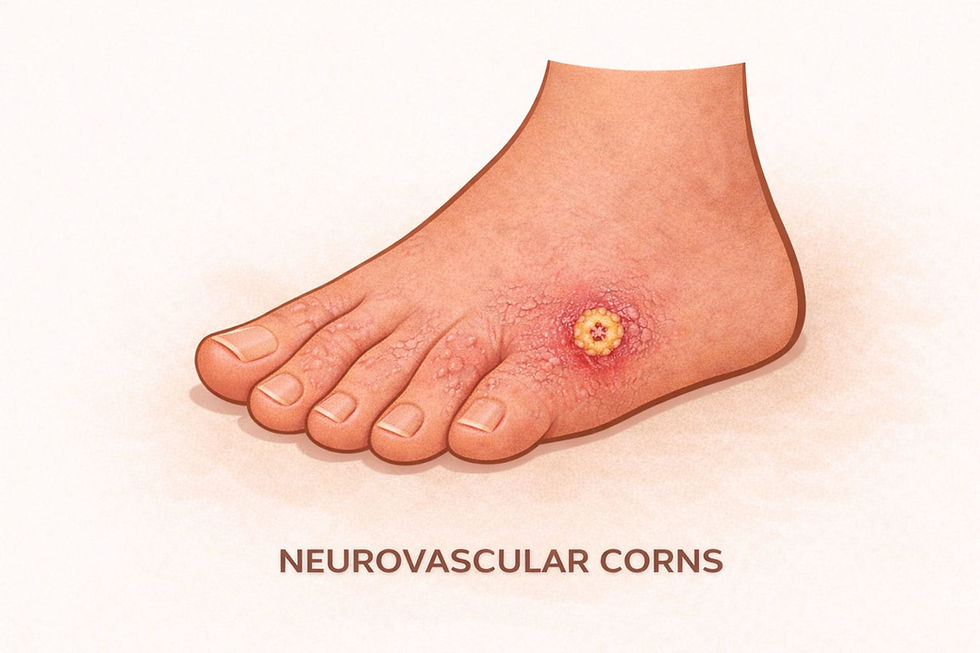
Neurovascular Corns
Neurovascular corns are a more complex type of corn that contain blood vessels and nerves, causing severe pain.
These corns can bleed and often recur after treatment, often requiring professional podiatric care.
If you experience persistent pain or notice bleeding, it’s essential to seek professional help.
Self-treatment may not be sufficient given the complexity of these corns, and prompt treatment can prevent further complications.
Fibrous Corns
Fibrous corns are generally long-standing corns that have become deeply embedded in the skin.
They may be associated with scar tissue, making them tougher to treat with over-the-counter methods.
If corns on your feet are not responding to standard treatments, consult a podiatrist.
This type can be bothersome and may require specialised treatment options to help remove them effectively.
Do not hesitate to seek professional advice if you encounter this type of corn.

How to Treat and Prevent Corns
Treatment of foot corns varies by type. Here are some helpful strategies to treat and prevent corns effectively:
Use protective padding: Incorporate toe sleeves, corn cushions, or soft gel pads to reduce pressure on affected areas.
Apply urea-based creams: Such creams soften thickened skin and help exfoliate dead skin. For example, consider using our 40% Urea Foot Cream available in our shop.
File gently: Use a pumice stone or foot file regularly, but avoid this method if painful or if you are diabetic.
Keep feet dry and clean: This is especially important for soft corns between the toes to prevent moisture buildup.
Choose footwear wisely: Opt for shoes with roomy toe boxes and breathable materials to help prevent corns.
Consult a podiatrist: If you have persistent pain, bleeding, or underlying conditions related to your corns, it is highly recommended.
By implementing these measures, you can minimise the risk of developing corns and enhance your overall foot health.
Understanding the types and characteristics of foot corn is vital for treatment and prevention.
By identifying the signs early and taking proactive steps, you can enjoy healthier, pain-free feet.
Don’t let corns on your feet disrupt your daily activities. Whether you opt for home remedies or professional treatments, staying ahead is essential for long-term relief.
For more tips on managing skin buildup, see our guide on keloid vs hypertrophic scar differences or explore our moisturising products to support healthier feet.

Further Reading from The Foot Aftercare Institute:
Explore more expert tips and foot care guides to support your skin health recovery.
Discover how scar tissue can develop thickened skin, how it differs from regular calluses, and how to treat it safely.
Download our digital bundle to get step-by-step advice on healing, moisturising, and preventing recurring skin issues
Moisturise and soften hard skin safely - especially useful if your corns are surrounded by dry, thickened tissue
Our curated product kid supports everyday comfort, ideal for people prone to corns and pressure build-up
Understand when at-home care isn't enough and when to seek professional help


Comments