
Callus vs Corn: What’s the Difference and How to Treat Each Safely
Updated: Apr 6
Thickened skin on the feet is a common issue for many people, but not all hard skin is created equal.
Calluses and corns are both thickened skin growths that result from pressure and friction, yet they develop differently, have distinct characteristics, and require different treatment approaches.
Understanding the difference between a callus and a corn is crucial to treating and preventing these common foot issues effectively.
What Is a Callus?
A callus is an area of thickened skin that forms in response to repeated pressure or friction.
It serves as the body’s natural defence mechanism, protecting the deeper layers of the skin and underlying tissues.
Characteristics of Calluses
Shape and Size: Calluses are usually broad and flat. They can cover a larger area of skin.
Colour: They typically appear yellowish or slightly grey.
Location: Calluses are often found on weight-bearing areas of the foot, such as the heel and the ball of the foot.
Pain Level: Generally, calluses are painless unless they become excessively thick.

Common Causes
Calluses commonly develop due to several factors:
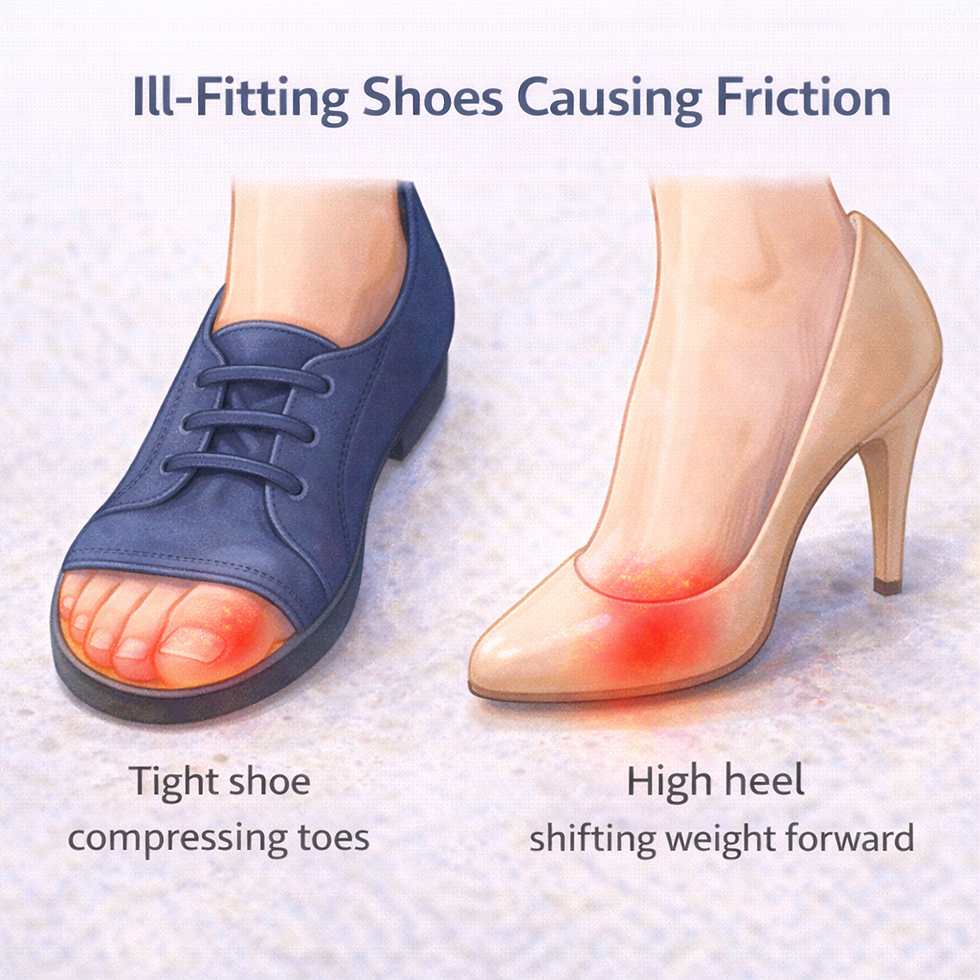
Tight Footwear: Shoes that do not fit properly can cause friction.
High Activity Levels: Frequent activities, such as running or standing for long periods, can contribute.
Abnormal Foot Alignment: Conditions like flat feet can lead to uneven pressure distribution.
Walking Barefoot: Hard surfaces can exacerbate friction on the feet.
If you're interested in a deeper breakdown of callus causes, check out this helpful resource: Callus Causes: Why Hard Skin Forms on Your Feet.
What Is a Corn?
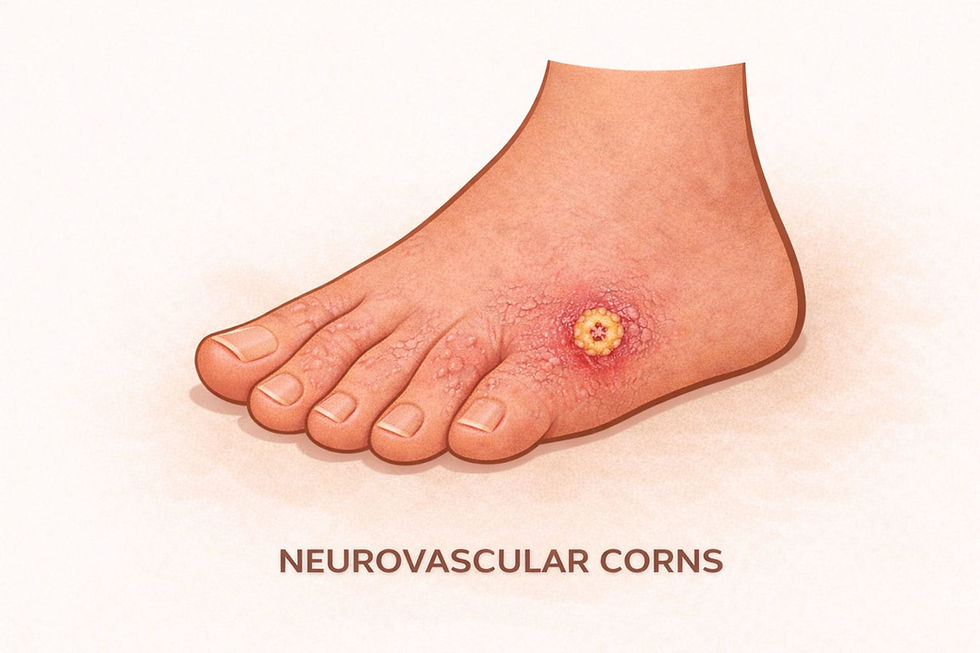
A corn is a smaller, more concentrated area of thickened skin compared to a callus.
Unlike calluses, corns contain a hard central core that can press into the deeper layers of skin, which is why they can be painful.
Characteristics of Corns
Size: Corns are typically small and circular.
Shape: They are raised with a defined centre.
Pain Level: Corns often cause pain, particularly when pressed.
Location: Corns commonly occur on or between the toes.

Corns are smaller than calluses and often form from focused friction or pressure
Corns develop due to different factors than calluses:
Tight or Narrow Shoes: Shoes that compress the toes can lead to corns.
Toe Deformities: Conditions like hammertoes can create uneven pressure points.
Overlap of Toes: If one toe overlaps another, it can cause friction and the formation of corns.
For further information on different types of corns, visit: Foot Corn Types Explained.
Callus vs Corn: Side-by-Side Comparison
Understanding the differences between a callus vs corn can help you identify and treat them appropriately. Here’s a quick overview:
Feature | Callus | Corn |
Size: | Larger | Smaller |
Shape | Flat and Spread Out | Round with Hard Core |
Pain | Usually Painless | Often Painful |
Location | Heel, Ball of Foot | Toes |
Cause | Broad Pressure | Focussed Friction |
This simple comparison highlights how calluses and corns are not the same and underlines the importance of targeted treatment.

Why People Confuse Them
Both calluses and corns share several similarities, leading to confusion for many individuals. Both conditions:
Form due to friction or pressure
Appear yellowish
Involve thickened skin
However, treatment for each condition differs, especially when pain is a factor.
If you’re unsure whether you have corns, consider checking out this guide: What Causes Corns on Feet? What Causes Corns on Feet?.
When It’s Not a Callus or Corn
In some cases, thickened skin on the feet may not be a callus or corn.
It's essential to recognise other conditions that could resemble these issues, such as:
Plantar Warts: Caused by a virus and feature small black dots.
diabe
Thickened Scar Tissue: This may happen after an injury or surgery.
Infected Callus: If you notice redness or discharge, it may be infected.
Diabetic Pressure Lesion: These require special attention due to the risk of diabetes.
If you have concerns about hard skin over scar tissue, refer to this guide: Callus Over Scar: Why It Happens and How to Fix It Safely.
If you notice symptoms like redness, swelling, or discharge, consider reading this resource: Infected Foot Callus: Symptoms, Treatment & When to See a Podiatrist.
For individuals with diabetes, it's critical never to ignore thickened skin on their feet; see "Diabetic Foot: Warning Signs and Prevention."
How to Treat a Callus Safely
Treating calluses focuses on reducing pressure and softening the skin.
Here are some effective treatment options:
Wear Supportive Footwear: Choose shoes that provide adequate support and cushioning.
Reduce Friction: Consider using orthotic inserts or pads to redistribute pressure.
Gentle Filing: Use a pumice stone or foot file; avoid aggressive cutting, as it can cause injury.
Moisturising: Applying urea-based moisturisers can help soften the thick skin.
For proper product application guidance, refer to this article: How to Use Urea Cream and Silicone Gel Properly.

How to Treat a Corn Safely
Treating corns requires redistributing pressure and protecting the area.
Consider these treatment options:
Wider Footwear: Choose shoes with a broader toe box to reduce compression.
Toe Padding or Separators: Use cushioning products to alleviate pressure between toes.
Protective Cushions: These can shield affected areas and provide comfort.
Professional Debridement: If corns are painful, a podiatrist can safely remove them.
Avoid cutting corns at home, as this can result in complications. If pain persists, find out when you should see a podiatrist for foot problems: When to See a Podiatrist for Foot Problems.
When to Seek Professional Help
It’s essential to seek professional care if you notice any of the following issues:
Severe pain in the affected area
Bleeding or cracking skin
Redness spreading beyond the callus or corn
Fluid leakage from the affected area
Diabetes or circulation issues
Early intervention can help prevent complications and provide lasting relief.
Frequently Asked Questions
Q) Is a corn worse than a callus?
A) Corns are often more painful because their hard central core presses into deeper tissue.
Q) Can a callus turn into a corn?
A) Not directly, but focused pressure on a callus can lead to the formation of a corn.
Q) Should I cut them off at home?
A) No. Cutting thickened skin can increase the risk of infection and complications.
Q) Do calluses and corns go away on their own?
A) They may improve if the pressure is removed, but without addressing the underlying cause, they are likely to return.

Further Reading from The Foot Aftercare Institute:
Explore more expert tips and foot care guides to support your skin health recovery.
Understand the underlying pressure and friction patterns that lead to thickened skin formation
Explore the different types of corns and how they develop in specific areas of the foot
Infected Foot Callus: Symptoms, Treatment & When to See a Podiatrist
Learn the warning signs that a callus or corn may require professional care
Chronic dryness can worsen thickened skin and increase irritation over time
Not sure whether it's a minor issue or something more serious? Here's when expert assessment is recommended
Callus Over Scar: Why it Happens
See how thickened skin can form over surgical scars and how this differs from corns
By understanding the distinctions between calluses and corns, you can develop a proactive treatment and prevention plan.
Focus on examining the pressure sources on your feet and invest in proper footwear to enhance your foot health.


Comments