
What Do Healthy Feet Look Like? Signs of Normal Skin, Nails, and Structure
Updated: Feb 15
Healthy feet form the foundation of our overall well-being. Yet many people pay attention to their feet only when issues arise.
Understanding what healthy feet look like is crucial for early identification of potential problems, which can prevent complications and aid in recovery from surgery.
This comprehensive guide will cover the characteristics of healthy feet, from the appearance of skin and nails to their structural integrity.
Why Understanding Healthy Feet Matters
Too often, we overlook our feet until pain or discomfort prompts a visit to the doctor. It's essential to recognise that healthy feet can lead to a better quality of life, allowing you to stay active and engaged in daily activities.
Early recognition of foot problems is vital; minor issues can escalate if left untreated.
Moreover, understanding foot health is particularly beneficial for those recovering from surgery.
Knowing the signs of healthy and unhealthy feet can help monitor recovery and make informed decisions about foot care.
What Healthy Foot Skin Should Look Like
Healthy foot skin exhibits several key features:
Even Colour: The skin should have a consistent tone without any unusual discolouration.
Soft but Resilient Texture: Healthy skin feels smooth and pliable, maintaining its elasticity.
Minimal Cracking: There should be no noticeable cracks or fissures, particularly on the heels.
Normal Moisture Balance: Well-hydrated skin is essential for overall foot health.

Signs Skin May Not Be Healthy:
Thick Calluses: While some callusing can be normal, excessive thickness may indicate a problem.
Corns: These are small, painful thickenings of skin formed by friction.
Dry Cracking Heels: This can cause discomfort and lead to infections.
Fungal Rashes: Look out for red or scaly patches, indicative of conditions like athlete’s foot.
Eczema Patches: Dry, itchy areas may indicate eczema or dermatitis.
For more information, check out our articles on Callus over scar, Foot corn types, and Athlete’s foot treatment.
What Healthy Toenails Look Like
Healthy toenails also have distinctive characteristics:
Smooth Nail Surface: The nails should be free of ridges, pits, or other irregularities.
Light Pink Nail Bed: A healthy nail bed should have a pink hue, indicating good circulation.
Even Thickness: The nails should be uniformly thick without thinning.
No Lifting or Discolouration: Healthy toenails adhere closely to the nail bed and maintain a consistent colour.

Warning Nail Signs:
Black Toenails: This can occur from blunt force trauma or fungal infections.
Thick Nails: Thickening can indicate fungal infections or other health issues.
Ingrown Nails: These can cause pain and are typically found on the big toe.
Fungal Nail Infection: A discoloured, brittle nail is often a sign of a fungal infection.
For additional insights, see our articles on Black toenail and Foot and nail fungus
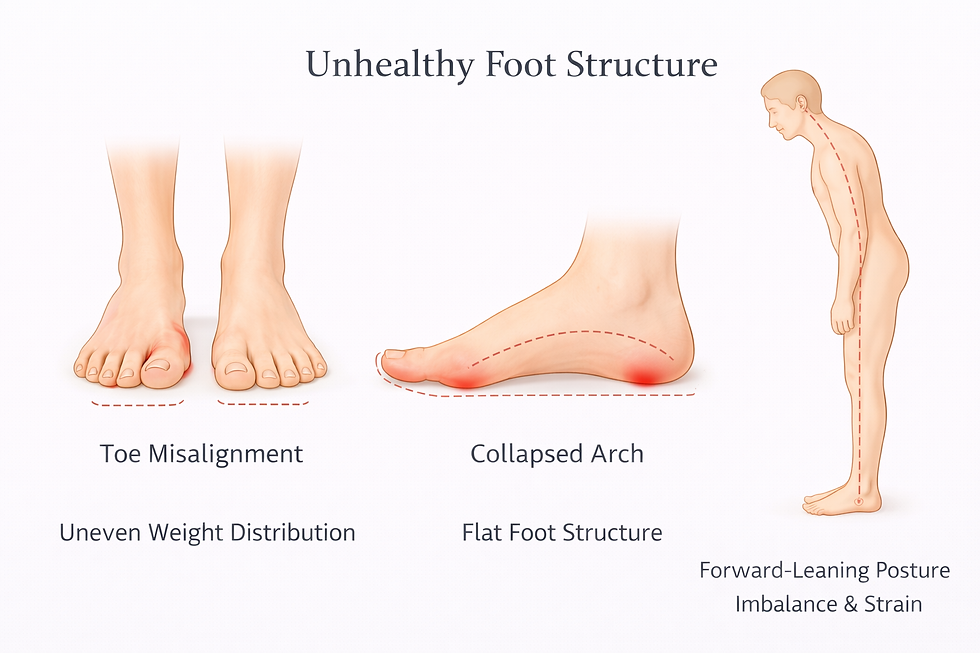
What Healthy Foot Structure Looks Like
A balanced foot structure is another critical aspect of foot health.
Healthy feet possess:
Balanced Arch Support: Your foot's arch should be neither too flat nor too high.
Toes Aligned Naturally: Toes should point straight ahead without overlapping.
Even Weight Distribution: When standing, your weight should be evenly distributed across the foot.

To learn more about foot types, please read our Foot Types article.
How Foot Shape Influences Long-Term Foot Health
Different foot shapes can influence long-term foot health, leading to various risks:
Flat Feet Risks: People with flat arches may experience pain and instability.
High Arch Risks: High arches can lead to uneven weight bearing and plantar fasciitis.
Toe Shape Variations: Certain toe shapes, such as bunions, can cause discomfort and structural issues over time.
For more on this topic, check out our articles on Foot types and toe shape variations.
Signs Your Feet May Need Extra Care
Noticing potential foot health issues early is crucial. Here are some signs to watch for:
Pain When Walking: Any discomfort while walking may indicate underlying issues.
Persistent itching may indicate skin conditions such as infections or eczema.
Swelling: Sudden or unexplained swelling may warrant immediate attention.
Scar Tightness: If your foot scars feel tight or restrictive, it is essential to address them.
Pressure Discomfort: Feeling unusual pressure in your shoes may indicate a poor fit or foot deformities.
If you experience any of these symptoms, read more about it in our articles on Foot Recovery Timeline and "Keloid vs Hypertrophic Scarring
Simple Habits That Maintain Healthy Feet
Maintaining healthy feet should be part of your regular self-care routine. Here are some uncomplicated habits:
Moisturising Regularly: Keeping your feet hydrated can help prevent cracking and dryness.
Proper Nail Trimming: Regular nail care prevents ingrown nails and keeps them healthy.
Pressure Protection: Wearing proper cushioning and orthotic supports can reduce pressure points.
Wearing Correct Footwear: Make sure shoes fit well; avoid shoes that are too tight or too loose.
Monitoring Skin Changes: Keep an eye on any changes in your foot skin, and take action if necessary.
Consider incorporating products such as our Emollients & Barrier Creams, Toe Spacers, and Shoe Insoles into your foot care routine.
When To See A Podiatrist Even If Feet Look Normal
Seeing a podiatrist isn't just for when you see or feel problems. Regular check-ups are advisable even if your feet appear normal. A podiatrist can provide valuable insights into your foot health and help catch issues before they escalate.

Further Reading from The Foot Aftercare Institute:
Explore more expert tips and foot care guides to support your skin health recovery.
Maintaining healthy feet is an ongoing process that requires attention, care, and the ability to recognise warning signs. Keep this guide handy to ensure your feet remain strong, functional, and pain-free!

Comments