
Black Toenail: What Causes It and How to Treat It Safely at Home
Updated: Jan 8
A black toenail is an unsettling sight for many people. Though most cases are harmless, they can be painful and may look alarming. If you have a black toenail, rest assured, you're not alone. It's a common issue, particularly among athletes and individuals who love outdoor activities. Thankfully, there are various ways to treat this condition at home, as well as effective in-clinic options if needed. In this post, we will explore the causes of black toenails, safe home treatments, and preventive measures to help keep your toenails healthy.
What Causes a Black Toenail?
Understanding what causes a black toenail is crucial for effective treatment. Here are some of the most common culprits:
Trauma or Injury
One of the primary reasons for a black toenail is trauma or injury. This can occur from stubbing your toe, dropping something heavy on your foot, or wearing tight-fitting shoes during physical activities.
Repetitive Pressure/Friction
Athletes and individuals who frequently compress their toes often develop black toenails. This repetitive impact can lead to bruising under the nail.
Fungal Infection
A fungal infection can change the colour of your toenail, often causing it to appear yellowish or black. Fungi thrive in warm, moist environments, which makes feet particularly susceptible.
Blood Under the Nail (Subungual Hematoma)
When the nail bed is injured, blood can pool beneath the nail, leading to a painful black discolouration.
Underlying Medical Conditions
Conditions such as diabetes and circulation issues can also manifest as black toenails, due to reduced blood flow or impaired healing.
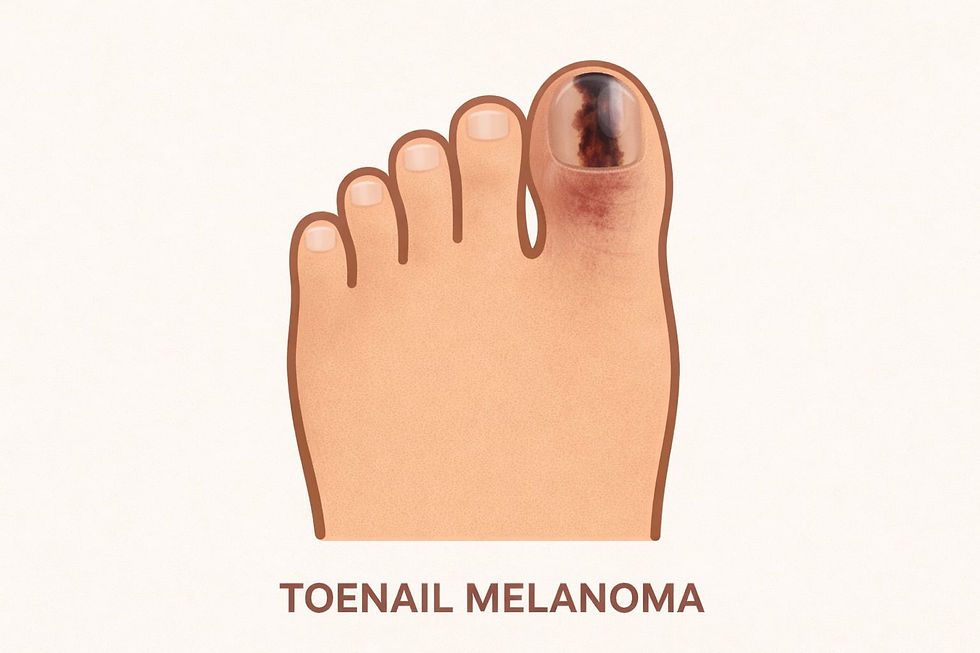
Toenail Melanoma
Although extremely rare, a black toenail may indicate toenail melanoma. This serious condition requires prompt medical evaluation. Link to the NHS for more information.
How to Tell What’s Causing Your Black Toenail
Determining the cause of your black toenail can help you decide on the proper treatment.
Here are some indicators to consider:
Duration of Symptoms: If the black discolouration has been present for an extended period, it might be more than just bruising.
Pain Level: Severe pain could indicate a more serious injury or infection.
Location of Discolouration: A black line may indicate a more serious underlying condition, whereas widespread discolouration could be trauma-related.
Any Recent Injury or New Footwear: Note any injuries or changes in footwear that might have led to the issue.
Signs of Infection: Look for swelling, pus, or a foul smell, which may indicate an infection requiring medical attention.

Safe At-Home Treatments
If you're dealing with a black toenail, here are some safe at-home treatments you can consider:
Rest and Elevate Foot
To reduce swelling and improve blood flow, rest your foot and elevate it whenever possible.
Cold Compress if Recent Trauma
Applying a cold compress can help relieve pain and reduce swelling within the first 48 hours post-injury.
Keep Nail Clean and Dry
Maintaining a clean and dry environment can help prevent infections. Gently wash your foot with mild soap and water, then dry it thoroughly.
Trim Carefully (Only if Safe)
If your nail is long, you can trim it carefully to prevent snagging, but only do this if it does not cause pain or further injury.
Over-the-Counter Antifungal Creams
If you suspect your black toenail is due to a fungal infection, consider using over-the-counter antifungal creams as a treatment option.
Urea Cream for Surrounding Hard Skin
Using a urea cream can help soften any surrounding hard skin, facilitating growth and comfort. Check out this product.
When to Leave It Alone
In many cases, it’s best to let a black toenail grow out naturally without intervention, especially if it’s not causing you significant pain.
Over-the-Counter Antifungal Creams
When to See a Podiatrist
While many cases of black toenails can be treated at home, there are times when you should seek professional help:
Severe Pain: If the pain is intolerable, it may indicate a more serious issue.
Nail Lifting or Oozing: This may indicate a nail bed infection that requires medical attention.
Spreading Redness/Swelling: If you notice increasing redness or swelling around the nail, consult a professional.
No Improvement in 2–3 Weeks: If your condition doesn’t improve after a few weeks, see a podiatrist.
Blackness Spreading or Affecting Multiple Nails: This may indicate a systemic issue.
If Diabetic or Poor Circulation: Individuals with diabetes or circulation issues should always consult a healthcare provider regarding nail problems.
Need tailored advice? Download our Free Foot Recovery Guide Sample or explore the Full Foot Recovery Bundle

How to Prevent Future Black Toenails
Implementing specific measures can significantly reduce the risk of recurrent black toenails. Here are some effective prevention tips:
Wear Properly Fitted Shoes: Ensure your shoes fit well, especially during sports activities. Shoes that are too tight can cause pressure on your toenails.
Trim Nails Correctly: Always trim your toenails straight across to reduce the risk of ingrown toenails, which can lead to blackening.
Moisturise to Prevent Hard Skin and Friction: Keeping your feet well-moisturised will prevent hardened areas and friction that can lead to injury.
Consider Silicone Toe Protectors or Spacers: These can protect your toenails during high-impact activities.
Use Breathable Socks: Opt for socks made from moisture-wicking materials to keep your feet dry.
Maintain Hygiene to Avoid Fungal Infections: Regular washing and drying of your feet are essential practices to prevent fungal infections.
Black toenails can be a nuisance, but understanding their causes and safe home treatments will help you manage this condition effectively. Implement preventive measures to ensure your toenails stay healthy and pain-free. Don’t hesitate to seek professional advice if you notice any concerning symptoms. Here's to healthy, pain-free toes!
Want to stay on top of toenail health and foot recovery? Grab our Complete Foot Recovery Bundle Or try the Free Recovery Guide Sample - Ideal for aftercare at home.

Further Reading from The Foot Aftercare Institute:
Explore more expert tips and foot care guides to support your skin health recovery.
Why is My Toenail Turning Black Without injury?
Explore common causes like fungal infections, pressure, or underlying medical conditions.
Nail Clipper Set - Fingernail & Toenail Care Tools
Maintain your toenails safely with high-quality clippers designed to prevent trauma and thickening
How to Use Urea Cream and Silicone Gel Properly
Learn how urea cream can soften thickened toenails or surrounding calluses - especially after discolouration or damage.
Foot and Nail Fungus Infection
Understand the symptoms and stages of nail fungal infections, a common cause of black or discoloured toenails.
Free Foot recovery Guide Sample
Get our free downloadable guide to support nail healing, skin care, and healthy foot hygiene routines.


Comments