
Why is My toenail Turning Black Without Injury? Causes, Risks & When to Worry
Updated: Jan 8
Noticing a black toenail without any memory of trauma can be alarming. While we often associate nail discoloration with injuries, there are several reasons why a toenail might turn black, even in the absence of notable trauma. In this article, we will explore both common and rare causes of black toenails and offer guidance on when to seek medical attention.
Common Causes of your nail turning black without injury
Subungual Hematoma (Without Noticeable Trauma)
A subungual hematoma occurs when blood collects between the nail and the nail bed, causing discoloration. Sometimes, the cause of this bleeding may go unnoticed due to a minor bump or pressure, such as from wearing tight shoes or taking long walks. The initial bleeding can take time to show up, leading to confusion about its origin and can potentially explain some common reasons for your nail turning black without injury.

Subungual hematoma is often harmless, it will typically fade as the nail grows out. If the pain is minimal and there are no other concerning symptoms, you may not need to take further action.
Fungal Nail Infection (Onychomycosis)
Fungal infections can also lead to the darkening of toenails. When a fungal infection sets in, debris can build up under the nail, creating a dark brown or black appearance. Onychomycosis is more likely to occur in individuals with sweaty feet, poor shoe ventilation, or those who share nail tools, like at salons.

In most cases, a fungal infection is manageable with appropriate treatments and good foot hygiene.
Chronic Pressure from Footwear
For runners and hikers, black toenails can sometimes occur without a specific event leading to the discoloration. This can happen due to chronic pressure on the toenails caused by repetitive actions, like running downhill or wearing shoes that are too tight. Runners may not notice this microtrauma until the nail changes color.
Tips for Managing Black Toenails from Pressure
Wear Proper Footwear: Ensure shoes fit correctly and provide enough room for your toes.
Use Moisture-Wicking Socks: Keep feet dry to reduce the likelihood of fungal infections.
Take Breaks: Give your toes rest during long walks or runs.
More Serious (But Less Common) Causes
Melanoma (Subungual Melanoma)
While most causes of a black toenail are benign, it's crucial to be aware of the more serious potential condition known as subungual melanoma. This type of skin cancer may present as a dark streak under the nail, which remains unchanged as the nail grows.
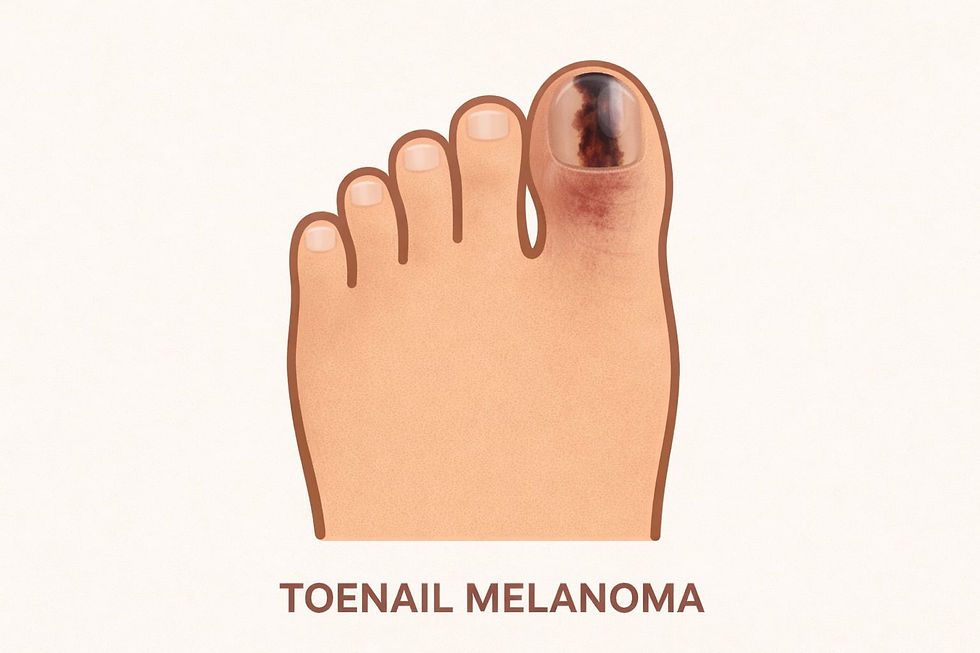
If you notice a streak that spreads over time or has irregular borders, it's vital to consult a podiatrist or dermatologist urgently. Early detection is key to successful treatment.
Other Systemic Conditions
Various systemic health issues can also manifest in nail discoloration. For example, poor circulation—as commonly seen in diabetes—may lead to changes in nails, including turning black. Kidney diseases or the effects of certain medications can also alter the appearance of toenails.
If you have underlying health concerns, it's worthwhile to keep track of any changes in your toenails and report them during your health check-ups.
When to See a Podiatrist
While many cases of black toenails are harmless, certain signs suggest the need for professional evaluation. Consider seeing a podiatrist if you experience any of the following:
Painful Nail: If your black toenail becomes painful, it may indicate an issue requiring attention.
Spreading Darkness: If the discoloration spreads or changes in appearance, consult a physician.
No Improvement: If you do not see improvement after 6 to 8 weeks, professional advice may be needed.
Nail Deformity or Detachment: If the nail shows signs of detachment or deformity, this warrants immediate consultation.
Treatment and Aftercare
Treatment approaches will vary based on the underlying cause of the toenail discoloration:
Nail Trims and Monitoring: Keeping your nails trimmed and clean can prevent further complications.
Antifungal Creams: Over-the-counter or prescription antifungal treatments may be effective for fungal infections.
Offloading Pressure: Consider wearing open-toe footwear or shoes that provide ample space for your feet.
In-Office Drainage/Removal: If there is trapped blood under the nail, a medical professional can drain it to relieve pressure.
Preventing Black Toenails in Future
Prevention is key when it comes to black toenails. Here are a few tips to help minimize your risk:
Proper Footwear Fit: Ensure shoes fit well and have enough room in the toe box to reduce pressure.
Nail Hygiene: Keep your nails clean, trimmed, and carefully monitored for changes.
Moisture Control: Use moisture-wicking socks and regularly change socks to keep feet dry.
Foot Inspections: If you are diabetic, regular foot inspections are critical to catch issues early.
Myths About Black Toenails
It's common to hear myths about black toenails that may cause undue worry:
“It's always fungus.” This is not true. While fungal infections are common, there are many other possible causes.
“It's just dirt.” In some cases, dark discoloration can indicate blood or pigment rather than just dirt.
“It'll fall off no matter what.” This can lead to unnecessary damage. It's essential to identify the underlying cause to avoid further complications.
Final Thoughts
If you notice a black toenail without any memory of injury, don’t panic, but do take it seriously. Recognizing the common causes and understanding when it's time to consult a podiatrist can help prevent complications. Early professional advice can significantly contribute to your foot health.
Taking care of your toenails is integral to your overall well-being. With proper attention and care, you can keep your feet healthy and avoid potential issues in the future.
Browse our full range of foot care solutions in the Foot Aftercare Shop

Further Reading from The Foot Aftercare Institute:
Explore more expert tips and foot care guides to support your skin health recovery.
White Marks on Toenails: Causes & When to Worry (Coming Soon)
Compare dark versus light discolouration—understand what different nail changes may be trying to tell you.
Foot and Nail Fungus Infection: What You Need to Know
Could a fungal infection be darkening your nail? Learn the signs and what to do next.
Toenail Clipper Set for Thick or Damaged Nails
A high-quality nail clipper set can help prevent further damage when trimming darkened or thick nails
This naturally potent antifungal oil helps support overall nail health.
Free Foot Recovery Guide Sample
Our free digital guide explains the basics of nail care, scar treatment, and post-trauma foot healing - download it today


Comments