
Keloid Scars After Surgery: What They Are and When to Seek Advice
Updated: Jan 9
Keloid scars are a concern for individuals recovering from surgery, particularly foot procedures, where scarring can affect mobility and aesthetics.
Understanding keloids and their management is crucial for recovery and self-confidence.
In this blog post, we will explore what keloid scars are, how they form, and when to seek professional advice.
Understanding Keloids
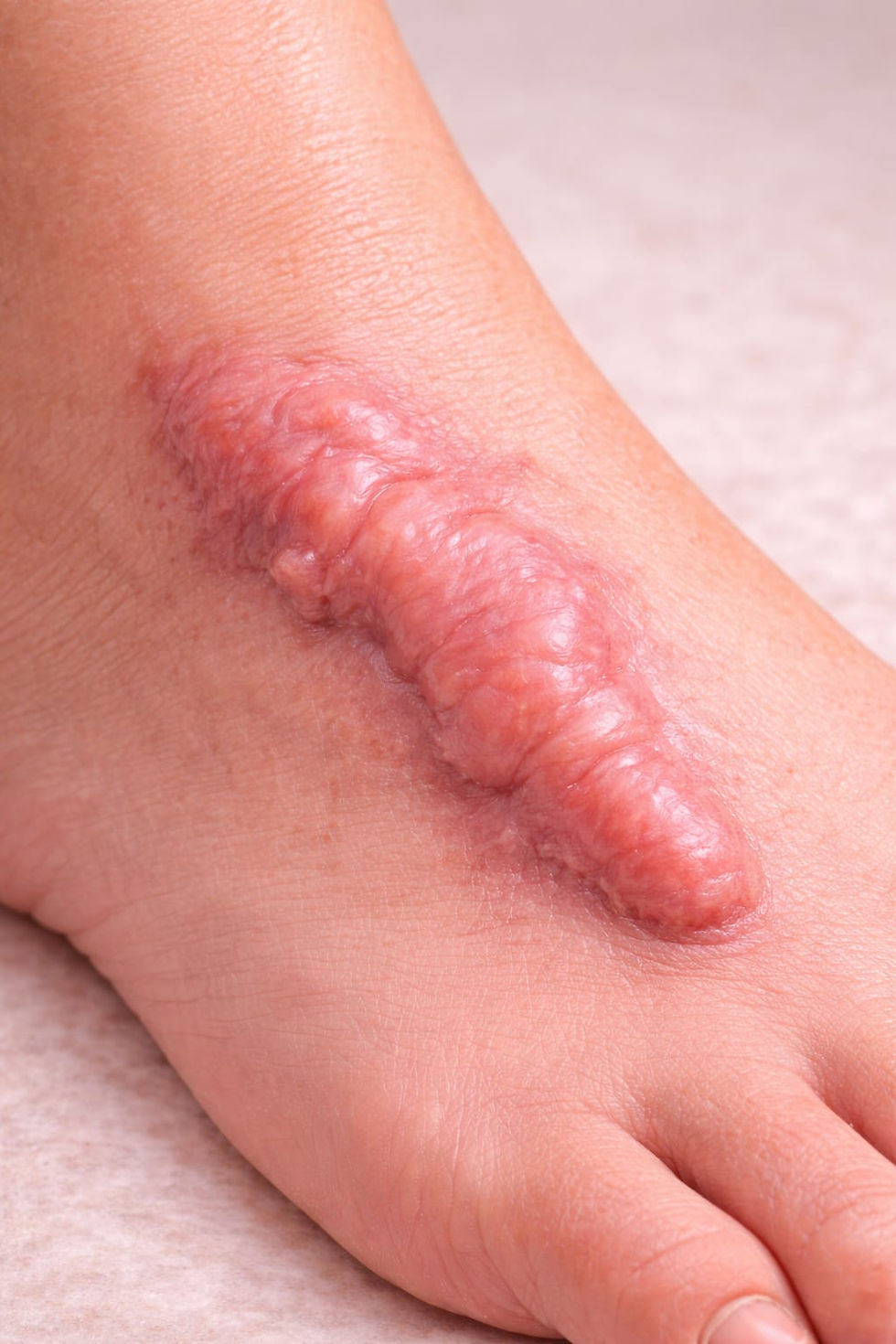
Keloids are raised scars that result from excessive collagen production during the healing process.
Unlike typical scars, which typically fade and flatten over time, keloids can continue to grow beyond the original wound site.
They may appear red, purple, or darker than the individual's natural skin tone and may be itchy or painful.
How Keloids Form
When the skin is injured, the body initiates a healing process. This involves the production of collagen, a protein that helps to repair damaged tissue.
However, for some individuals, this healing response can become overstimulated, leading to the formation of keloid scars.
Factors that can contribute to keloid formation include:
Genetics: A family history of keloids can increase your risk.
Skin Type: Individuals with darker skin tones are at increased risk of keloid formation.
Location of the Injury: Certain areas of the body, including the chest, back, and ears, are more susceptible to keloids than others.
Risk Factors for Keloids
While anyone can develop keloids, certain factors may increase your likelihood:
Age: Keloids are more common in adolescents and young adults.
Sex: Males and females are equally affected.
Specific Conditions: Individuals with conditions such as acne, chickenpox, or piercings have an increased risk.
Identifying Keloid Scars
Early identification of keloid scars is essential for timely management. Here are some characteristics to look for:
Raised, thickened areas of skin
Changes in colour from the surrounding skin
Persistent itching or pain
Larger than the original site of the injury
If you suspect you have a keloid, it’s vital to seek professional advice as early intervention can help prevent further growth.

When to Seek Professional Advice
If you've had surgery, particularly on your feet or any area prone to keloid formation, it’s crucial to monitor the healing process closely.
Seek professional advice in the following situations:
Rapid Growth: If your scar appears to be growing rapidly, consult your healthcare provider.
Persistent Symptoms: Ongoing pain, itching, or discomfort can indicate that your scar requires attention.
Changing Appearance: If the scar changes colour or texture, it’s essential to get it evaluated.
Treatment Options for Keloids
Many individuals seek methods to manage keloids after surgery. Here are some treatment options available:
Steroid Injections: These can help flatten and reduce the size of the keloid.
Cryotherapy: Freezing the keloid can reduce its size and symptoms.
Surgical Removal: In some cases, keloids may be surgically removed, although this carries a risk of recurrence.
Silicone Sheets or Gels: Regular use can help flatten the keloid over time.
Laser therapy may help reduce redness and flatten the keloid.
It's crucial to consult with a dermatologist or a healthcare provider to discuss the best treatment option for your particular case.

Managing Keloids at Home
While professional treatment is essential, there are steps you can take at home to manage keloids effectively:
Keep the Area Clean: Clean the scar and the surrounding area with mild soap and water.
Moisturise Regularly: Keeping the scar well moisturised can prevent itching and discomfort.
Avoid Sun Exposure: Protect the scar from sunlight, as UV rays can darken the area.
Use Non-Irritating Dressings: Select non-comedogenic, hypoallergenic products to cover the scar during the healing process.
In addition, maintaining a healthy diet can help support your skin's healing. Foods rich in vitamin C, zinc, and protein are essential for skin repair and health.
The Importance of Awareness
Being informed about keloids and their potential to form after surgery is crucial for anyone undergoing medical procedures.
Recovery is not only about physical healing but also about understanding how to care for the skin.
Many individuals are unaware that keloids are common and manageable.
Regular check-ups with your healthcare provider will ensure that any problems are addressed early.
Whether you're recovering from foot surgery or another procedure, awareness and proactive care can significantly impact your recovery.
Final Thoughts
Keloid scars can be a source of concern after surgery, but understanding what they are and when to seek advice can empower patients.
With appropriate knowledge and resources, you can take steps to manage keloid scars effectively and facilitate a smoother recovery process.

Further Reading from The Foot Aftercare Institute:
Explore more expert tips and foot care guides to support your skin health recovery.
Hypertrophic vs Keloid Scars: How to Tell the Difference
Understand how hypertrophic scars differ from keloids in growth patterns, texture, and treatment options
Why Scar Tissue Feels Hard or Tight After Foot Surgery
Learn why some surgical scars feel firm, stiff, or raised - how to ease discomfort
Emollients and Barrier Creams for Skin Recovery
Protect healing skin using creams that restore moisture and shield against irritation.
Structured Foot Scar Recovery Plan
Follow a step-by-step healing guides with tips on moisture, silicone, and long-term scar care.
When to See a Podiatrist for Post-Surgery Concerns
Know when it's time to seek expert advice if your scar changes shape, colour, or becomes painful.


Comments